
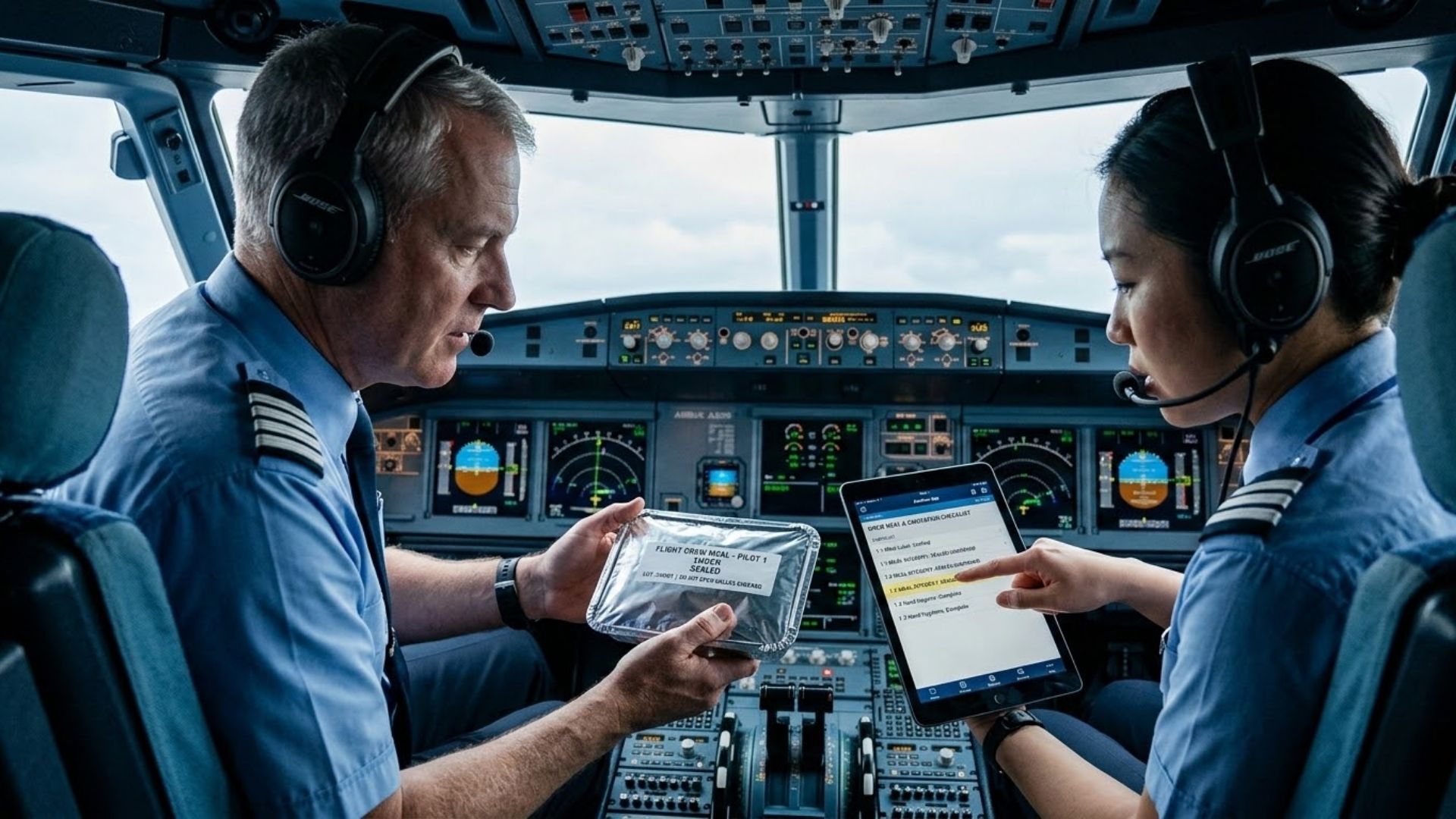
Split Meals, Safer Skies: Why the Captain and First Officer Don’t Eat the Same Meal ?

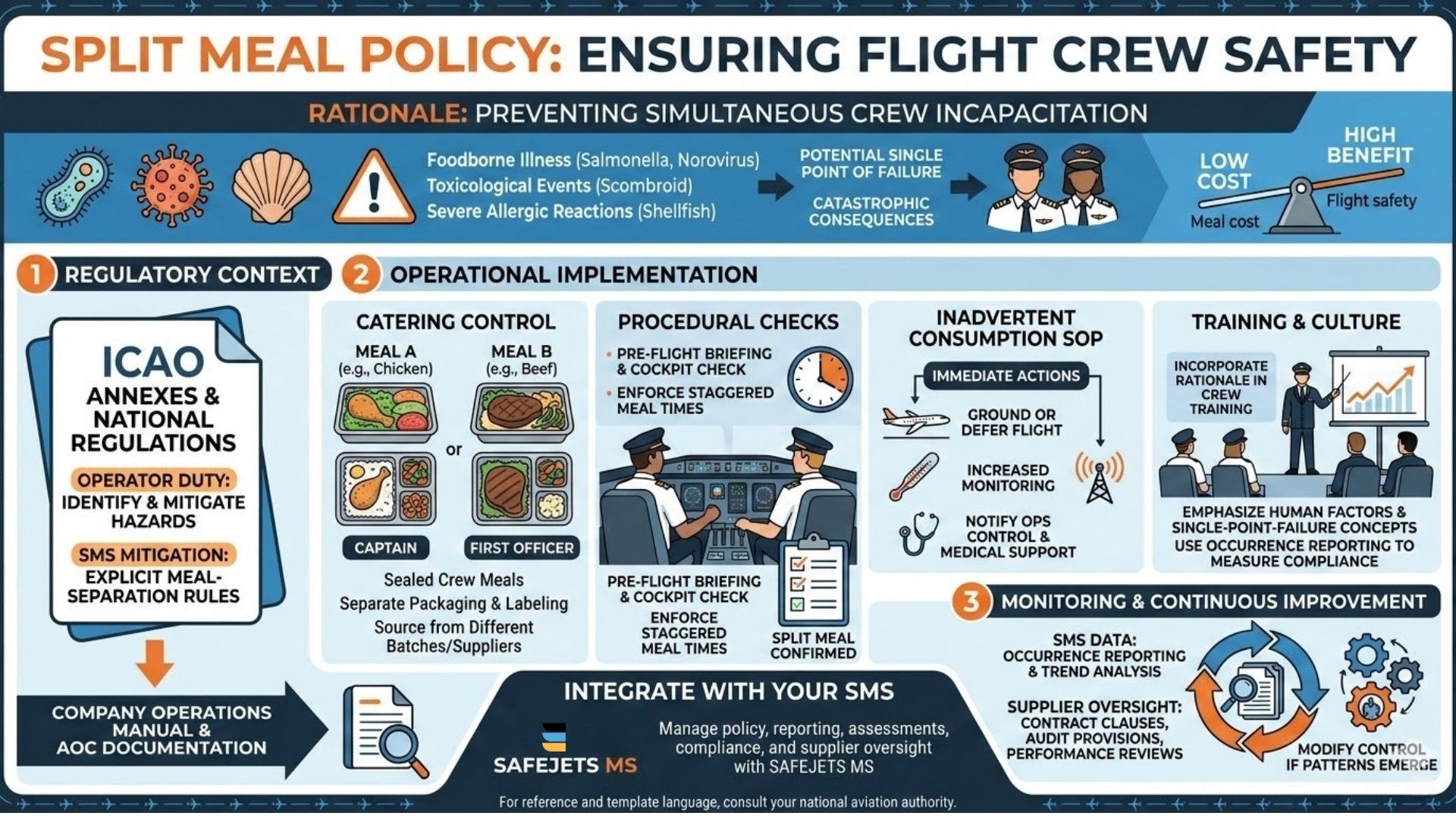
Split meals policies are a key mitigation used in multi-crew operations to prevent simultaneous crew incapacitation, a cornerstone concern in aviation safety management. By requiring that the captain and the executive officer (first officer) avoid eating the same meal, airlines reduce the risk of shared exposure to foodborne illness, allergic reactions, or toxicological events that could incapacitate both pilots at the same time. Such scenarios create a dangerous single point of failure with potentially catastrophic consequences. This article explains the operational rationale, regulatory context, and practical implementation steps for operators and flight crew to integrate a robust split meals policy into an active Safety Management System (SMS), ensuring that both the captain and the rest of the flight crew remain protected from shared exposure risks.
Operational and safety rationale
From a risk-management perspective, the hazard is crew incapacitation resulting from a shared exposure. Common causes include bacterial contamination (Salmonella, E. coli), viral agents (norovirus), and specific toxic or allergic reactions such as scombroid or shellfish allergy. Even non-infectious events — for example, incorrect food preparation producing a concentrated histamine load — can disable two crew members if they have consumed the same item. Because two-pilot operations rely on redundancy between the captain and first officer, maintaining independent exposures to food sources is a low-cost, high-benefit control.
Regulatory frameworks do not universally prescribe meal-separation in prescriptive language, but they do require operators to identify and mitigate hazards that could lead to crew incapacitation. ICAO Annexes and national regulations emphasize the operator’s duty to manage safety risks, and many civil aviation authorities and operators adopt explicit meal-separation rules in company Operations Manuals, Operations Specifications, or the AOC safety documentation. In practice, this control sits within the operator’s SMS as an accepted mitigation for a credible threat affecting the captain or other flight crew members.
Practical implementation and compliance guidance
Implementing a split-meal policy should be part of an operator’s broader Safety Management System (SMS) framework. Aviation professionals seeking to strengthen their understanding of SMS principles can explore the Safety Management System (SMS) – ICAO 9859 training, which covers hazard identification, risk assessment, and safety assurance practices used across the aviation industry.
The captain, as the pilot-in-command, typically has oversight of cockpit procedures and may confirm compliance with the policy during the pre-flight briefing with the first officer. Define the rule (for example: ‘‘flight deck crew must not consume the same meal served from the same catering load’’), and include guidance on exceptions, documentation, and contingency actions. Catering control is essential: specify sealed crew meals, separate packaging, and labeling. Where possible, source crew meals from different batches or suppliers, and enforce staggered meal times so that any post-prandial onset can be detected earlier and managed.
Training and culture are critical. Incorporate meal-separation rationale into crew training modules, emphasizing human factors and single-point-failure concepts. Use occurrence reporting and trend analysis within the SMS to measure compliance and effectiveness; modify the control if a pattern of catering incidents emerges. For operators conducting long-haul operations with augmented crews or multiple reliefs, extend the policy to apply across all flight crew positions and revisit crew pairing practices when catering logistics are constrained.
Finally, ensure coordination with ground operations and contracted caterers to support split meals procedures. Contract clauses should require caterers to adhere to crew split-meal or meal-segregation procedures and to notify the operator immediately of any contamination events. Include audit provisions in the supplier oversight program and record conformity with the operator’s food safety requirements in supplier performance reviews. For reference material and template language, consult the guidance and advisory material issued by your national aviation authority.
Conclusion
Split meals for the captain and first officer are a pragmatic control that reduces the risk of simultaneous crew incapacitation. Embedding a split meals policy in the Operations Manual, ensuring proper catering controls and reporting chains, and training crew to follow and enforce the procedure are essential steps for effective implementation. Compliance should be monitored through SMS data and supplier audits to maintain this mitigation as an effective aviation safety control.
You can manage split meals policies, hazard reporting, safety risk assessments, compliance monitoring, and catering supplier oversight with SAFEJETS MS