
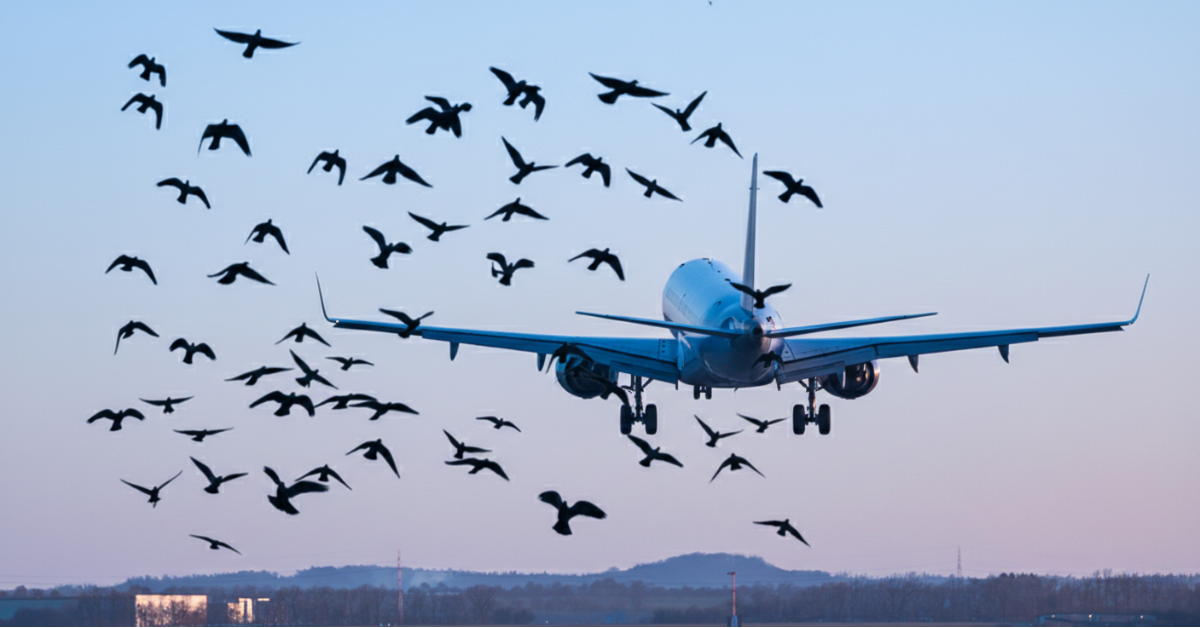
Bird Strike Risk: Applying the Bow Tie Method in Aviation Safety

Bird strikes Risk is a persistent aviation hazard that can cause significant aircraft damage, flight disruptions, and safety risk to passengers and crew. Effective management of bird strike risk is not only a matter of operational prudence but also of regulatory compliance for aerodrome operators and airline operators. The bow tie method offers a clear, visual way to connect causes with consequences and to identify barriers that prevent or mitigate an event. In this article, we explain how to apply the bow tie method to a bird strike risk, list common threats and consequences, and provide practical steps to integrate the results into your safety management system in line with international guidance.
Applying the Bow Tie to Bird Strike Risk
The bow tie method centers on a single top event — the moment when a bird strike occurs — and maps pathways on the left (threats that can lead to the top event) and on the right (consequences that flow from it). Between each threat and the top event are preventive barriers designed to stop the strike. Between the top event and consequences are mitigative barriers to reducing harm. This structure helps safety managers visualize weak points, assign ownership, and set performance indicators.
Typical threats that should appear on the left side of a bird-strike bow tie include common attractors and operational factors such as:
– Nearby waste sites, standing water or ponds, agricultural fields, lighting configurations, and known seasonal migration corridors.
On the right side, consequences range from minor airframe damage to catastrophic engine failure, forced landings, runway excursions during rejected takeoffs, and regulatory investigation. Each consequence should be paired with mitigations such as robust engine ingestion resistance procedures, rapid response for debris removal, and emergency response training.
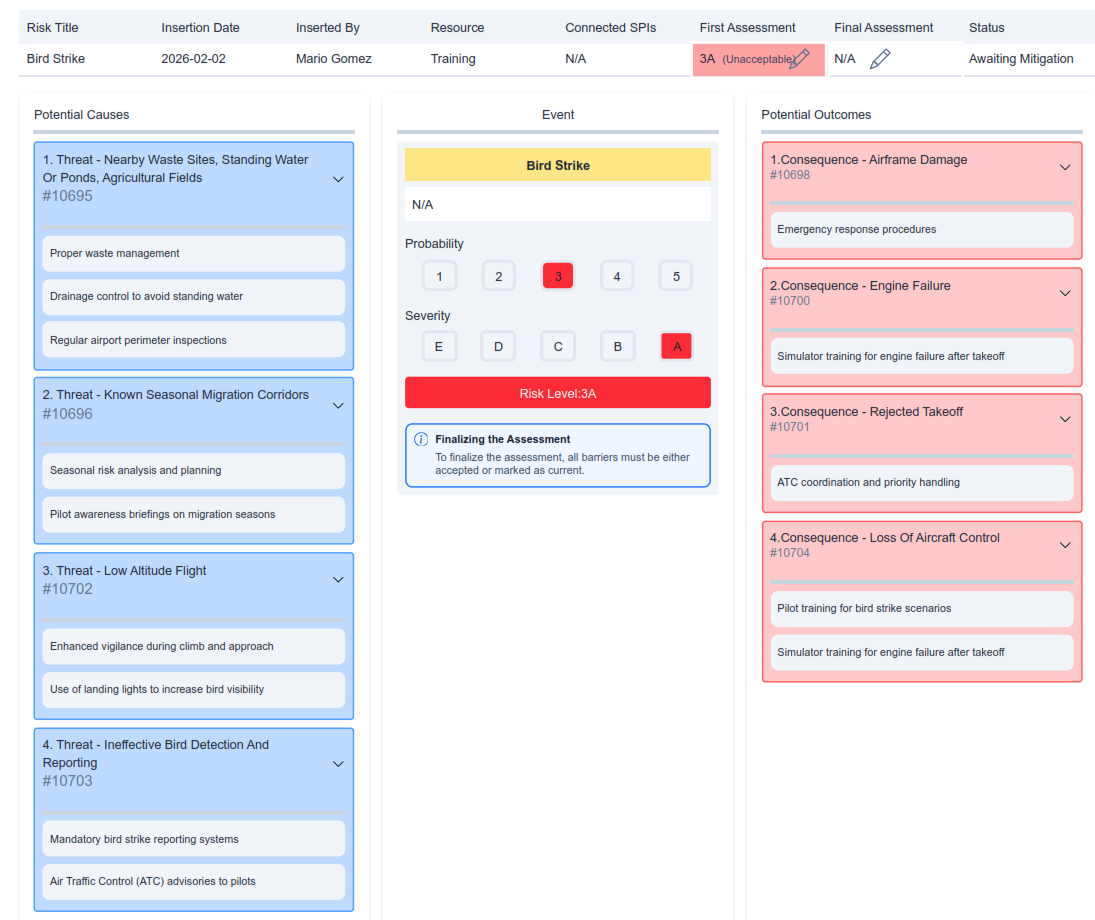
When building the bow tie, capture escalation factors (conditions that weaken barriers) and performance indicators for each barrier. For example, a preventive barrier of habitat management has escalation factors such as contractor non-compliance or a sudden change in land use, and its performance indicator could be frequency of site inspections or counts of bird activity near the movement area.
Practical implementation and regulatory alignment
Start with a multidisciplinary team that includes aerodrome operations, wildlife specialists, engineering, airside maintenance, and safety analysts.
Follow these practical steps:
- identify the hazard and top event;
- list credible threats and realistic consequences;
- determine existing preventive and mitigative barriers;
- document escalation factors and recovery actions;
- assign owners and measurable performance indicators;
- and review the bow tie during regular safety meetings.
- Keep records and make the bow tie part of your Wildlife Hazard Management Plan and your SMS documentation.
Align the process with international guidance such as ICAO Annex 14 and airport wildlife guidance and national circulars such as the FAA advisory material on wildlife hazard management.
Regulators expect evidence of systematic risk assessment, continuing monitoring, and corrective action. A well-documented bow tie demonstrates that you have identified credible pathways and implemented layered controls rather than relying on a single measure.
In terms of controls, preventive measures commonly include habitat modification, perimeter fencing, waste management agreements with local authorities, and deterrent systems such as auditory or visual scaring and avian radar for detection and dispersal. Mitigative measures include engine-out procedures, protective inspection protocols, pilot reporting and debriefing, and robust emergency response and maintenance workflows. Regular training and drills ensure that controls function when needed and that escalation factors are quickly identified and corrected.
Monitoring and continuous improvement complete the loop. Use KPIs such as bird sighting rates near runways, strike rates per 10,000 movements, barrier availability and response times. Audit findings, incident reports and trend data should feed back into the bow tie so barriers can be strengthened or replaced when performance falls below acceptable levels.
Conclusion: Building a bow tie for bird strike risk turns complex interactions into a manageable visual model. Use the method to link threats to concrete barriers, assign ownership, and align controls with ICAO and national guidance. Regularly monitor barrier performance and update the bow tie as operations and local habitats change.
SAFEJETS MS uses the bow tie method to manage the risks. Book a demo now and see in action.