
Window of Circadian Low (WOCL): A Practical Guide to 24/7 Fatigue Risk Management

Window of Circadian Low (WOCL) is a critical concept in fatigue risk management for aviation. It describes the period when human alertness and performance reach their lowest point due to the body’s circadian rhythm.
For flight and cabin crew, operations that intersect with the Window of Circadian Low (WOCL) require special attention because the risk of performance degradation, errors, and incidents increases.
This article explains what Window of Circadian Low (WOCL) is, why regulators and safety managers focus on it, and how operators can manage related risks in line with international practice. The guidance is practical and designed to help integrate WOCL considerations into your Safety Management System (SMS) and rostering processes.
What WOCL is and why it matters

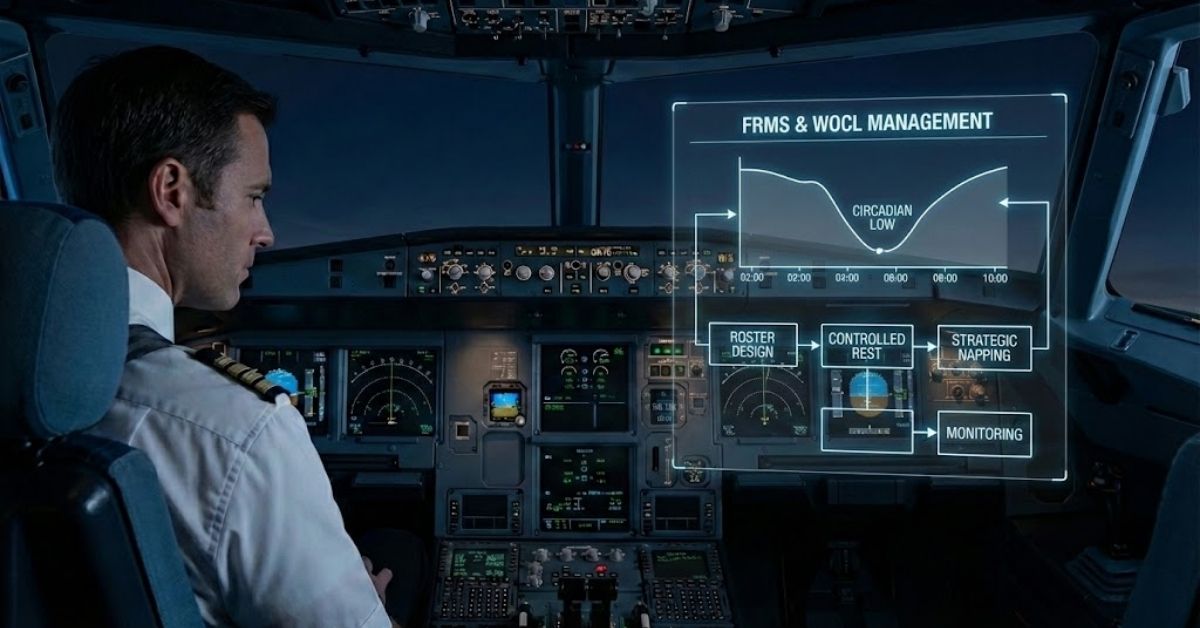
The Window of Circadian Low (WOCL) is typically the early-morning period—often cited as roughly 02:00 to 06:00 local time—when the human body signals for deep sleep. Individual variation exists, and factors such as prior sleep, time zone travel, and workload shift the exact timing and severity. During the WOCL, cognitive functions such as reaction time, attention, and decision-making are measurably reduced. That reduction matters in aviation because even short lapses can affect safety-critical tasks such as monitoring instruments, communication, and manual flying.
International regulators recognize the WOCL as a risk factor. ICAO guidance on Fatigue Risk Management and many national authorities embed WOCL considerations into flight and duty regulations or into frameworks that allow operators to use Fatigue Risk Management Systems (FRMS). For example, FAA rules for flight and duty time, EASA flight-time regulations and FRMS provisions, and ICAO FRMS guidance all encourage operators to assess and mitigate circadian low risks when designing rosters and managing long duty periods.
Practical steps to manage WOCL in operations
Managing WOCL risk starts with acknowledging that schedule timing affects human performance. Operators should conduct a hazard assessment that identifies roster patterns and sectors likely to fall in the WOCL for crew, then treat those as safety risks in the SMS.
When some WOCL exposure is unavoidable, use layered mitigations and document them clearly within your FRMS or SMS. Training and education for crew on circadian science and sleep hygiene helps individuals manage personal risk. Operational mitigations can include planned crew composition adjustments, additional briefing and monitoring during WOCL-affected sectors, controlled rest policies approved by the regulator, strategic napping before duty, and environmental controls such as bright light exposure on wake and reduced light before sleep.
Monitoring and reporting complete the loop: implement fatigue reporting, track fatigue-related events and near-misses, and use data to refine rostering and mitigations.For more on using operational data to drive change, see our related article “From Insight to Action: Using Data to Strengthen Business Aviation Safety and Compliance.”
Effective implementation requires alignment with regulatory requirements and auditability. Ensure your procedures reference applicable rules and guidance—such as ICAO FRMS principles, FAA 14 CFR Part 117 where relevant, and EASA flight-time and FRM provisions—and keep records that demonstrate risk assessment, mitigation selection, training, and continuous monitoring. Integration with the SMS risk register, Safety Performance Indicators related to fatigue, and regular management reviews will support compliance and continuous improvement. Consider simple metrics such as WOCL exposure hours per crew month and fatigue report rates to measure the impact of changes.
Operator actions that often reduce WOCL risk include:
-
Adjusting roster start times to minimize early-morning critical phases
-
Limiting consecutive night duties
-
Authorising strategic naps and controlled rest under approved procedures
-
Providing sleep and circadian training for crew
Implement these measures pragmatically. Pilot programs, local trials, and data collection make it easier to demonstrate effectiveness to regulators and to refine solutions for your operation.
Conclusion
Recognising and managing WOCL is essential for safe, compliant flight operations. Integrate Window of Circadian Low (WOCL) assessment into your SMS risk processes and use FRMS tools where permitted to tailor mitigations to your operation.
Ensure staff training, monitoring, and clear documentation so you can show regulators and auditors that WOCL risks are controlled.
Design rosters to reduce unavoidable WOCL exposure and build layered mitigations such as strategic napping and enhanced monitoring for early-morning operations. Use data from reporting and performance indicators to continuously adjust policies and demonstrate compliance with international fatigue management guidance.
Are you aware that SAFEJETS MS includes a FRMS module? Therefore, you can gather fatigue reports from your crew members and prevent the adverse effects of WOCL.